
Financing Agreement Prepayment Penalty Checklist
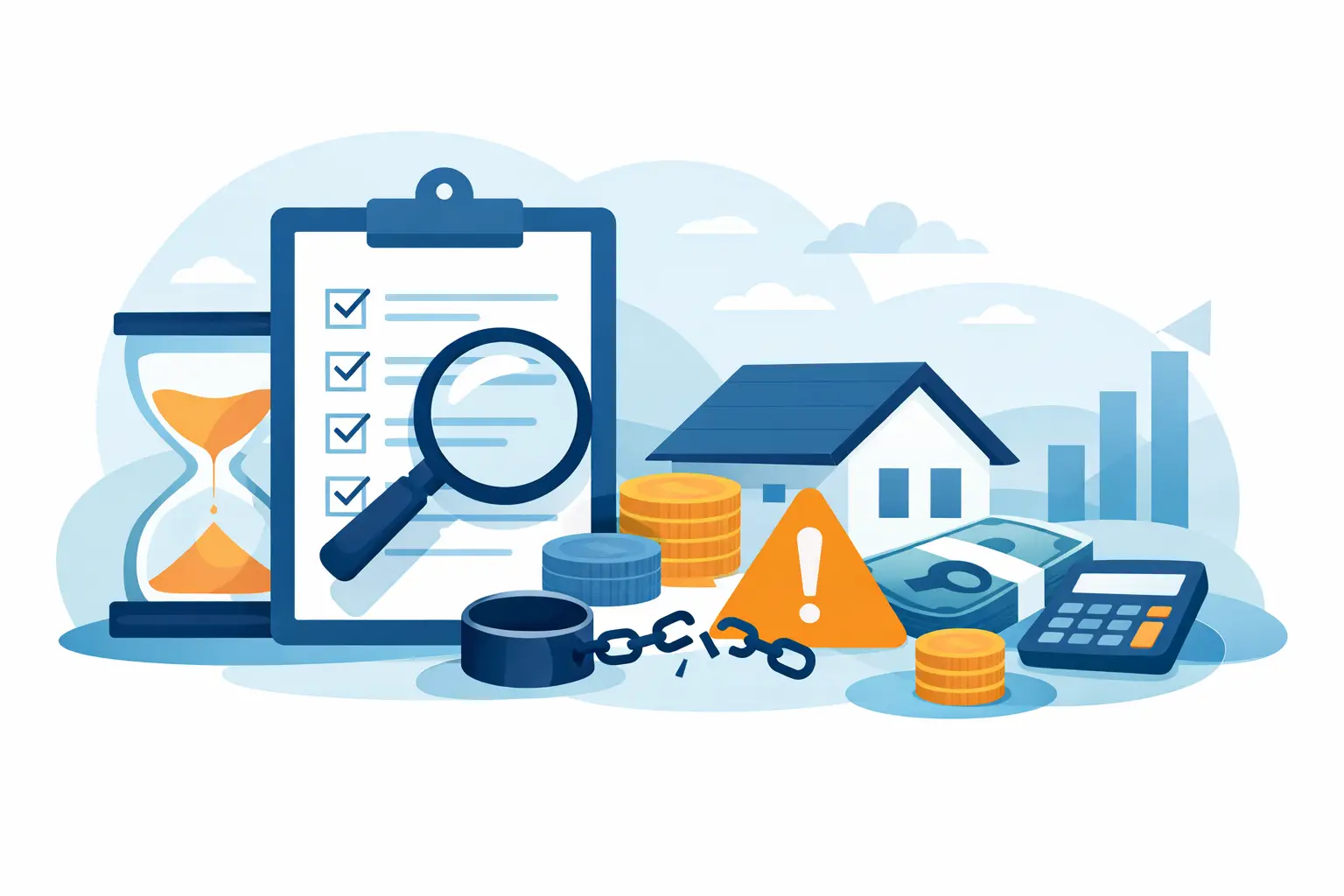
Paying off a loan early sounds like the financially responsible move. But a financing agreement prepayment penalty can change the math. Depending on the contract, refinancing, selling an asset, or making a large early payment could trigger a fee that costs hundreds or thousands of dollars.
The clause may be short, buried among definitions, or described with terms such as “early termination fee,” “yield maintenance,” “make-whole amount,” or “prepayment premium.” Before you sign, you need to know whether the lender can charge it, when it applies, and how the amount is calculated.
What Is a Financing Agreement Prepayment Penalty?
A prepayment penalty is a charge a borrower may owe for paying all or part of a financed balance before the scheduled end of the agreement. Lenders use these provisions to protect some of the interest income they expected to receive over time.
The clause appears in many types of financing documents, including mortgage agreements, business loans, equipment financing contracts, commercial real estate loans, auto loans, and certain personal loans. Whether a penalty is permitted, and how it must be disclosed, can depend on the loan type, the lender, and federal or state law.
A prepayment penalty does not always mean you cannot pay early. It means early payoff may come with a cost. The practical question is whether the interest you save outweighs that cost.
For example, suppose you refinance a loan and expect to save $4,000 in interest. If the original agreement requires a $3,500 prepayment fee, your savings may be much smaller than expected. If you are selling a property or business asset, the fee can also reduce the money left after closing.
Where to Find the Clause in Your Agreement
Do not assume a document has no penalty just because the payment schedule does not mention one. Look beyond the monthly payment amount and search the agreement for terms such as “prepayment,” “early payoff,” “premium,” “make-whole,” “yield maintenance,” “exit fee,” “termination,” and “acceleration.”
The clause may appear under a heading such as Payments, Optional Prepayments, Default and Remedies, Fees, or Definitions. In longer agreements, the definition of “Prepayment Amount” may be located in one section while the formula for calculating it appears in an exhibit or schedule.
Pay close attention to cross-references. A sentence stating that prepayment is permitted “subject to Section 4.3” is not the full answer. Section 4.3 may contain a complicated formula, exceptions, notice requirements, or a period when prepayment is prohibited altogether.
If you are reviewing a PDF, a plain-English first review can help surface payment obligations, deadlines, and fee provisions that deserve a closer look. ShieldMyDoc is an informational tool, not a law firm or a substitute for advice from a licensed attorney.
Common Ways Prepayment Penalties Are Calculated
Not every penalty works the same way. The calculation method determines whether the fee is manageable or a serious obstacle to refinancing or an early sale.
A percentage of the remaining balance
Some agreements charge a fixed percentage of the amount being paid off. A contract might require 3% of the outstanding principal in the first year, 2% in the second year, and 1% in the third year. This is often called a declining or step-down penalty.
The key detail is the base used for the calculation. Is the percentage applied to the original loan amount, the remaining principal, or the amount of a particular partial prepayment? The agreement should make that clear.
A set number of months of interest
Another common approach requires the borrower to pay a specified number of months of interest when paying early. For instance, the penalty might equal six months of interest on the remaining principal balance.
Check whether the contract uses the stated interest rate, the current variable rate, or another rate in its calculation. A few words can materially change the result.
Yield maintenance or a make-whole formula
Commercial financing agreements sometimes use more complex formulas intended to compensate the lender for interest it will not receive. Yield maintenance and make-whole provisions can depend on remaining payments, market interest rates, Treasury yields, discount rates, and other variables.
These clauses are not easy to estimate from a quick read. A fee that sounds minor can become substantial when many years remain on the loan term. If the amount could affect a business sale, property sale, or refinancing decision, ask the lender for a written payoff quote and a breakdown of the calculation.
When the Fee May Apply
A prepayment penalty may apply to more situations than a voluntary early payoff. Read the trigger language carefully.
Selling the financed property, replacing the loan with a new lender, paying down a large portion of principal, or receiving an insurance or condemnation payment may count as a prepayment under the agreement. In business financing, a change in ownership, merger, or transfer of collateral can also create payoff obligations.
Some clauses distinguish between full and partial prepayments. You may be allowed to make extra payments up to a certain amount each year without a fee, while payments beyond that limit trigger a penalty. Other agreements prohibit partial prepayments entirely unless the lender approves them in writing.
Also look for a “lockout period.” This is a period, often early in the loan term, when the borrower cannot prepay at all or can do so only by paying a specified premium. After the lockout period ends, the penalty may decrease or disappear.
Questions to Ask Before You Sign
A lender representative can explain its process, but ask for answers in writing when the fee could be significant. Your questions should be specific enough to expose unclear language.
Ask whether the agreement permits full and partial prepayments, whether a fee applies to each, and whether there are annual penalty-free payment limits. Ask for examples showing the estimated payoff amount after one year, three years, and five years. If the agreement uses a formula, request a sample calculation based on your expected balance.
You should also ask whether the fee applies if you refinance with the same lender, sell the collateral, receive a casualty-insurance payment, or pay off the balance after a default. Finally, confirm whether the lender can waive the fee and whether any waiver must be in a signed written amendment.
A verbal assurance that “we usually do not charge that” does not change a signed contract. If a concession matters to your decision, the agreement or a written amendment should state it clearly.
Compare the Penalty With Your Real Options
A prepayment penalty is not automatically a deal-breaker. A loan with a penalty may still have a lower interest rate, better payment terms, or features that make sense for your situation. The issue is whether the restriction matches your likely plans.
Think about the events that could cause an early payoff. Are you likely to sell your home, vehicle, equipment, or business asset soon? Do you expect to refinance if rates drop? Does your income fluctuate enough that you may want to make substantial extra payments? If the answer is yes, flexibility may be worth more than a slightly lower rate.
Do not compare only the monthly payment. Compare the projected cost of keeping the loan, paying it off early, refinancing, and selling the financed asset. Include the stated prepayment fee, any administrative charges, accrued interest, and other closing costs.
Watch for Related Clauses
The prepayment provision should be read alongside default, acceleration, collateral, and notice clauses. If you miss payments and the lender accelerates the debt, the agreement may require the entire balance immediately. It may also say whether a prepayment premium remains due after acceleration or default.
Notice requirements matter, too. Some contracts require advance written notice before a voluntary payoff. Missing that procedure can delay closing or change the payoff amount. Check where notice must be sent, how many days are required, and whether email is accepted.
If the contract is unclear, inconsistent, or financially significant, pause before signing. A qualified attorney licensed in your state can advise you on your specific agreement and the laws that may apply. The best time to ask about an early-payoff fee is before the loan becomes the only option in front of you.
ShieldMyDoc provides informational content designed to help you understand documents in plain English. Our service does not provide legal advice, legal representation, or financial advice. For advice about your specific situation, consult a qualified professional.
Related articles
Freelance Contract Payment Terms to Check First
Freelance contract payment terms can determine when you get paid, what happens after a late invoice, and what work you must deliver before payment is due.